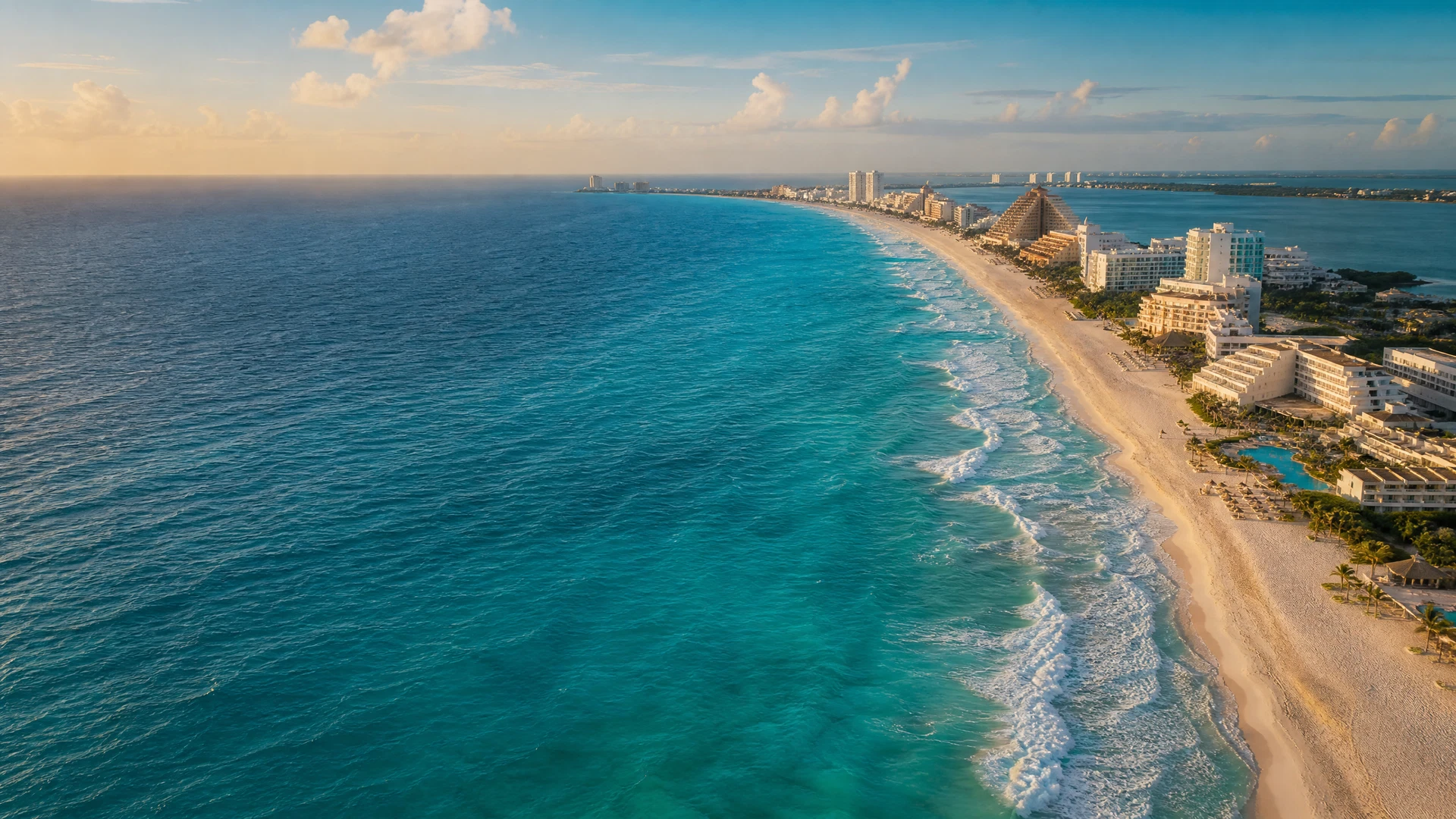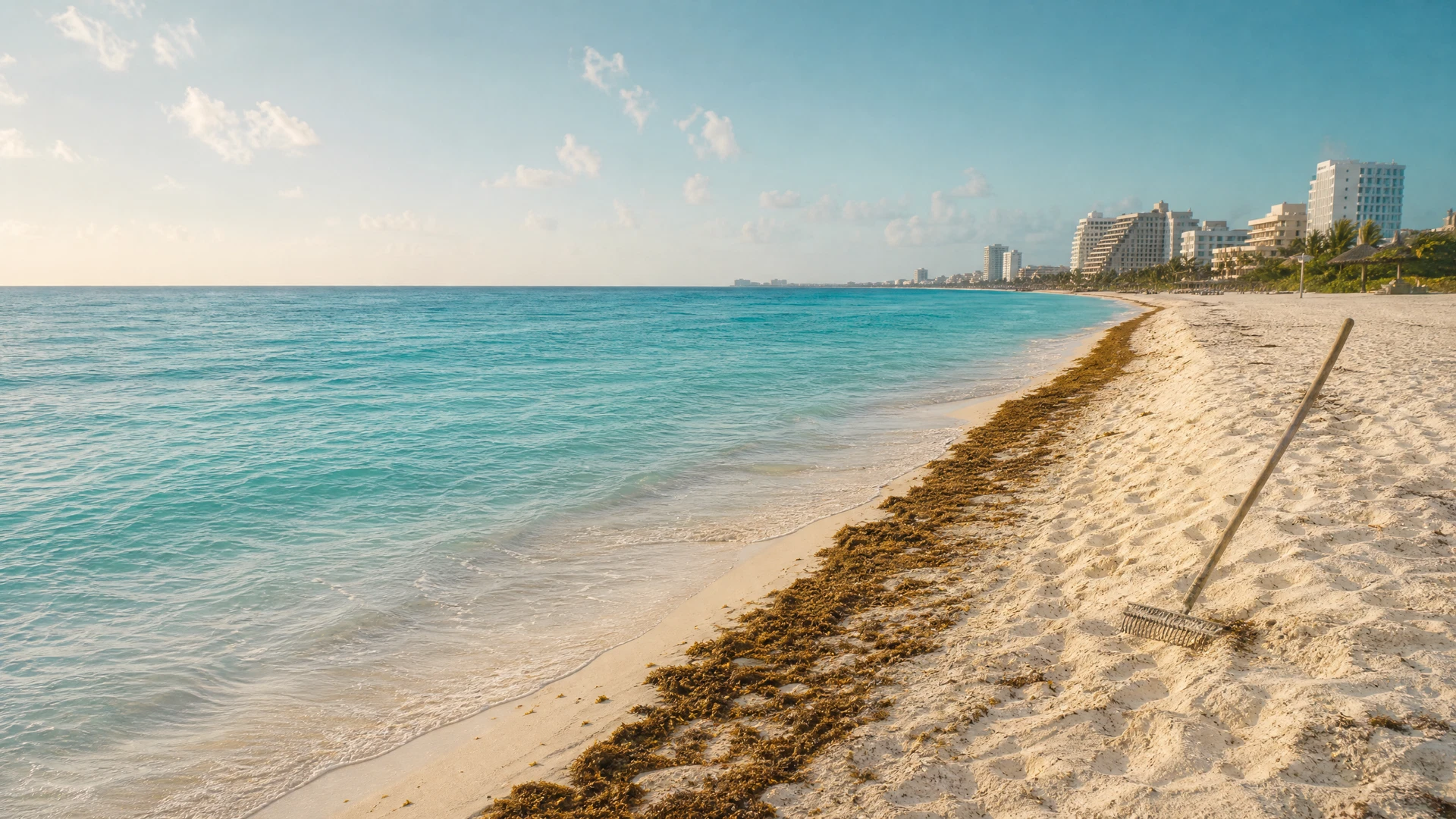
The powder‑white beaches are one of the main reasons many choose Cancun. Therefore it can come as a surprise when photos show large amounts of brown seaweed along the shoreline. This is sargassum. And yes — certain periods can significantly affect the beach experience. But the situation is much more nuanced than "Cancun has lots of seaweed". What is sargassum? Sargassum is a type of brown floating macroalgae. It occurs naturally in the Atlantic, but large amounts have, since 2011, regularly affected coastal areas in the Caribbean and the Gulf of Mexico. NOAA describes this as a recurring regional problem and monitors daily the risk of sargassum reaching the coast. (AOML) When ocean currents and wind carry it toward land, large amounts can accumulate on the beach. When is there the most sargassum? There is no specific date when sargassum "starts". Generally the risk is greater during spring and summer, while the winter months often have less. But year-to-year variations can be significant. This means a beach can be almost free of sargassum one week and have large amounts shortly afterward.
Why some beaches are more affected than others
The orientation of the beaches matters a lot. The long east-facing beaches in the Hotel Zone are more exposed to the Caribbean Sea. More sheltered beaches can therefore sometimes have far less sargassum at the same time. This is also a reason why Isla Mujeres can be interesting. Playa Norte faces a different direction than many of Cancun's east-facing beaches. Do hotels remove sargassum? Many resorts actively work to clear the beach. How effectively this works depends on:
- the amount that arrives
- the hotel's resources
- the size of the beach
- weather and wind
Does sargassum smell? Fresh sargassum in the water is one thing. When large amounts lie on the beach and decompose, it can develop an unpleasant smell. Therefore a lot of sargassum affects not only how the beach looks but also the overall beach experience. Should you avoid Cancun because of seaweed? No. But if a perfect beach is the main purpose of your holiday, you should factor sargassum into your choice of travel time and hotel. What can you do?
Travel during a period with lower historical risk
Winter and early spring can be attractive.
Choose your hotel carefully
Check which direction the beach faces.
Check the situation shortly before traveling
Don't rely on photos from the previous year.
Be flexible
If the beach at your hotel has a lot of sargassum, another beach the same day may have significantly less.
Go to Isla Mujeres
Playa Norte can have completely different conditions than the east-facing Cancun coast.
Cancun.no's future sargassum service
I actually think this could become one of the site's best features:
Sargassum status Cancun
with:
- Playa Delfines
- 🟢 / 🟡 / 🔴
- Playa Marlin
- 🟢 / 🟡 / 🔴
- Punta Cancún
- 🟢 / 🟡 / 🔴
- Playa Norte
- 🟢 / 🟡 / 🔴
based on available satellite data, local reports, and fresh observations. NOAA/USF already has daily regional risk data that can be used as one of the sources. (AOML) If we build this well, 'seaweed Cancun' alone could become an important reason why Norwegian travelers return to cancun.no before and during their holiday.